

Introduction
Welcome back to the weekly newsletter.
Most people wait until they are exhausted before they take space. They push through work, family duties, messages, errands, and social plans until their mind feels full. Then they wonder why they feel flat, irritated, or disconnected from themselves.
This week’s tool is the Solo Day Out: one personal day each month to recharge, reflect, and reset. Not a holiday. Not an escape. A planned day where you step out of normal noise and check in with your life.
Balance is not only about managing work and home. It is also about having enough space to hear yourself think. A Solo Day Out gives you that space. You leave your normal environment, reduce input, and spend a few hours reconnecting with what matters, what is draining you, and what needs to change.
Weekly highlight: Regular personal day to recharge and reflect.
Your normal routine has gravity. It pulls you into the same thoughts, same reactions, and same habits. That is why it can be hard to see clearly while sitting at the same desk, checking the same phone, and moving through the same calendar.
A Solo Day Out breaks that pattern.
It gives you distance from the daily loop. You are not trying to solve your whole life in one day. You are creating a clean space to notice what has been building up. Stress. Resentment. Tiredness. Excitement. Doubt. New ideas. Things you have been avoiding.
Most people only reflect when something goes wrong. This is the opposite. You reflect before the pressure turns into a problem.
What a Solo Day Out actually is
This does not need to be expensive or dramatic. It can be a walk, a museum visit, a quiet café, a train ride to a nearby town, a long lunch alone, or a few hours in a park with a notebook.
The important part is that it is intentional.
You are not just “having free time.” You are stepping away from the usual noise to recharge and review your life. That means no work catch-up, no endless scrolling, and no filling the day with errands. If the day becomes admin, it stops being a reset.
The best version is simple: leave the house, go somewhere calm, spend time alone, and think properly.
Choose the right setting
Pick a place that gives you space without requiring too much effort. If the plan is too complicated, you will cancel it.
A good setting has three qualities. It is easy to reach. It feels different from your normal routine. It allows you to be alone without feeling awkward.
That might be a quiet coffee shop, a bookshop, a local park, a gallery, a riverside walk, or a hotel lobby with a notebook. The location is not the point. The state of mind is.
You want somewhere that helps you slow down.
Use the day in three phases
The first phase is decompression. For the first hour, do not force deep reflection. Walk. Sit. Drink coffee. Let your mind settle. If your head is full, that is fine. It often takes time before the noise drops.
The second phase is reflection. Open your notebook or record yourself on the phone:
- What is giving me energy?
- What is draining me?
- What am I avoiding?
- What has felt out of balance this month?
- What do I need more of?
- What do I need less of?
The third phase is decision. Do not leave with ten commitments. Choose one adjustment for the next month. One boundary. One conversation. One habit. One thing to stop. One thing to protect.
That is enough. The Solo Day Out is not successful because you wrote pages of notes or recorded hours of reflection. It is successful if you return with one clear change.
Keep your phone under control
Your phone can destroy the reset quickly. One message becomes ten. One photo becomes scrolling. One “quick check” pulls you back into the same noise you were trying to step away from.
Set a simple rule before you start. Use your phone for maps, music, transport, or emergencies. Do not use it for work, email, feeds, or random checking.
If that feels hard, it is a useful signal. It means you probably need the day more than you think.
Make it monthly, not occasional
Once a year is too rare. Once a week may be unrealistic. Once a month is practical.
Put it in your calendar like a real appointment. Protect half a day if a full day is not possible. The point is rhythm. A monthly reset helps you catch drift early before your life becomes overloaded by default.
This is especially useful for people with busy jobs, families, and responsibilities. You may not have unlimited personal time. That is exactly why you need a planned reset. If you do not book it, life will consume it.
What changes over time
After one Solo Day Out, you may feel calmer. After three months, you start seeing patterns. You notice which commitments keep draining you. You notice which relationships need attention. You notice where work is leaking too far into life. You notice what you keep saying matters but never protect.
That awareness is valuable. It helps you make better decisions before resentment builds.
Balance is not created by one perfect schedule. It is created by regular corrections. A Solo Day Out gives you the space to make those corrections with a clear head.
Application
Book one Solo Day Out in the next 30 days. Choose a simple place, block the time, and keep the plan light. During the day, use three phases: decompress, reflect, decide.
Write down what is giving you energy, what is draining you, and what needs to change next month. Then choose one adjustment only. Put that adjustment into your calendar before the day ends.
Summary
A Solo Day Out is a regular reset for your mind and your life. It gives you space to step away from noise, recharge properly, and notice what needs attention. You do not need a big plan. You need a few quiet hours, honest reflection, and one clear adjustment for the month ahead.
Till Next Time,
Maciej
Build the Life You Were Meant to Live
👉 Are you ready to start?
Begin with Establish Foundations. A free training to help you reclaim your time, energy, and focus, so you can finally start making meaningful progress.
👉 Want to truly change your life and achieve any goal?
Build Life Strategy that’s flexible, achievable, and aligned with what truly matters to you. In just 30 days, you’ll start making real progress toward your goals with tools built to fit your real life.
Take Control of Your Career
Complete blueprint to accelerate your career, salary and change forever the way you look at your career.
👉 Want to learn full framework?
Start with Career Framework. This free training and toolkit help you understand how your career really works, so you can stop guessing, start strategizing, and build a career that actually moves forward.
👉 Ready to re-design your career around your true value?
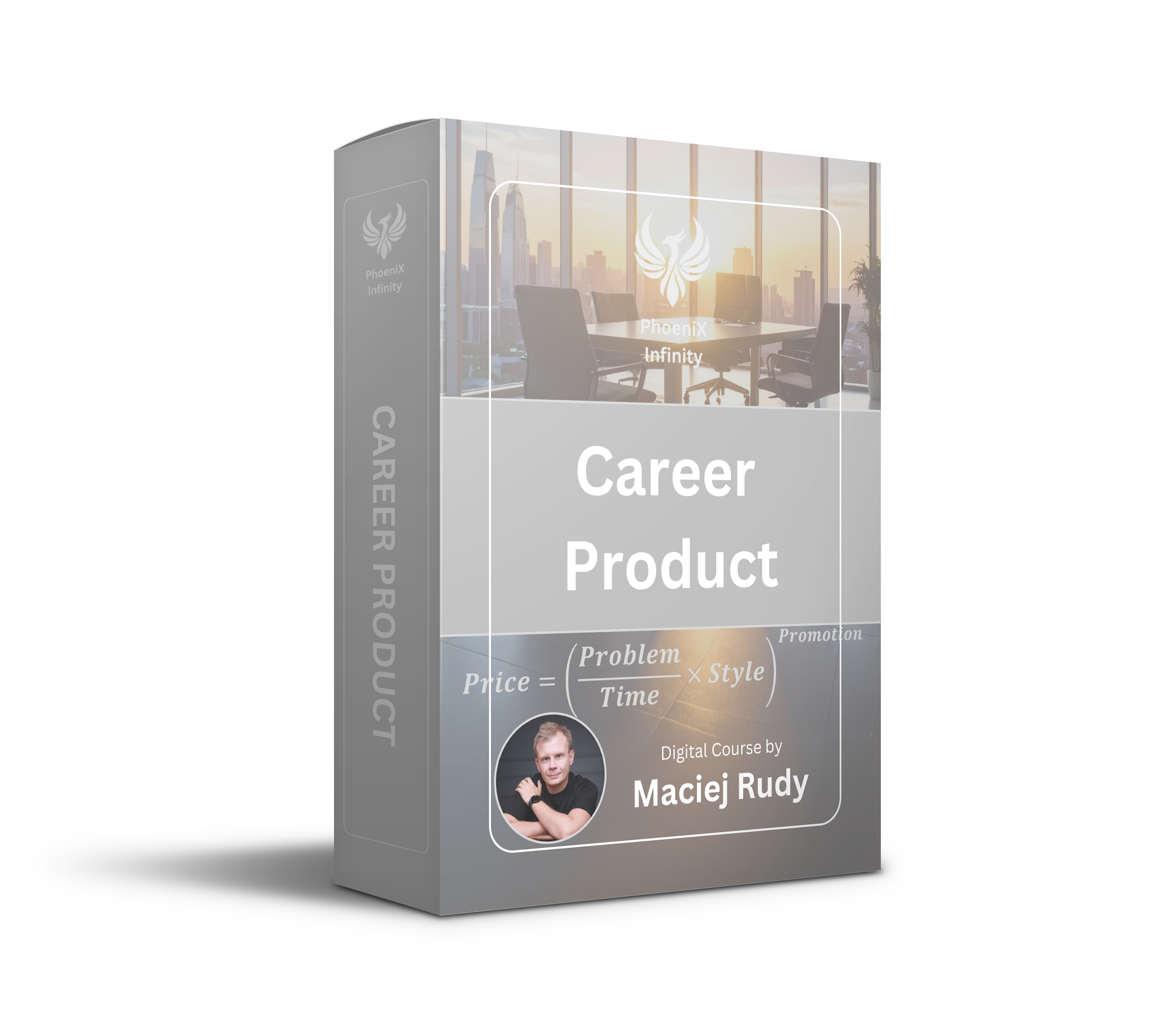
Step into Career as Product Course. If you're feeling stuck in your role, unsure how to communicate your value, or wondering why others with less experience are advancing faster, this course is for you.
No pressure. Just the tools, structure, and mindset to move forward, wherever you're starting from.





Responses