

Introduction
Welcome back to the weekly newsletter.
Email creates a strange kind of unfinished work. Even when you are not reading it, you know it is there.
Unread messages accumulate. Follow-ups sit somewhere in the pile. Small requests stay unresolved. And every time you reopen the inbox, you need to work out what matters again.
That creates mental residue.
But the opposite extreme can also become inefficient. If you spend all day constantly clearing email just to protect a zero, the system starts controlling you.
So this week’s challenge is not about becoming obsessed with Inbox Zero. It is about testing whether a deliberate daily reset actually reduces mental load. For the next two weeks, clear your inbox to zero by 6 p.m. each weekday and track what happens to your stress.
Weekly highlight: Clear email to zero by 6 p.m. each weekday for two weeks and note stress change.
The important word here is experiment. Do not assume Inbox Zero is automatically better.
Test it.
The real question is:
Does ending the day with a fully processed inbox make you feel more in control, or does maintaining it create unnecessary work?
You need two weeks of consistent execution to find out.
Define what “zero” actually means
Inbox Zero does not mean every email is fully solved. That would be unrealistic. It means every message has been processed.
By 6 p.m., each email should be in one of a few states:
- deleted;
- archived;
- replied to;
- converted into a task;
- delegated;
- deliberately deferred.
The inbox itself should contain nothing requiring another decision. That distinction matters. If a message requires two hours of work, do not keep it in the inbox for six days as a reminder.
Turn it into a task.
Schedule the work.
Archive the email.
Now the inbox is no longer your task manager.
Stop checking email continuously
This challenge will fail if Inbox Zero turns into Inbox All Day. The point is not to maintain zero every minute. That creates interruption. Instead, process email in defined windows.
For example:
- 9:30 a.m. first check
- 1:00 p.m. second check
- 5:30 p.m. final processing block
The exact times do not matter. The principle does.
You want fewer deliberate processing moments, not constant background checking. That protects focused work while still giving you a clean end-of-day reset.
Use the one-touch rule where possible
Every time you reopen the same email, you spend attention deciding what to do with it again. So when you process a message, try to make one decision.
If the reply takes two minutes, reply.
If someone else owns it, forward or delegate it.
If no action is needed, archive it.
If it creates work, capture that work somewhere reliable and remove the email from the inbox.
Do not repeatedly read messages without deciding. The objective is to eliminate repeated decisions.
Separate communication from work
This is where Inbox Zero becomes useful. An email is often not the work itself. It is a trigger for work.
For example:
Email: “Can you update the forecast before Thursday?”
The wrong system is: leave the email unread so you remember.
The cleaner system is: create a task: Update forecast: Thursday
Then archive the email.
The responsibility now lives in the place where you manage work. Email returns to being communication. This reduces one of the biggest sources of inbox stress: using unread messages as an improvised to-do list.
Create a hard 6 p.m. cutoff
The challenge needs a clear finish line. At your final processing block, clear what remains. Then stop. Do not keep reopening the inbox throughout the evening to preserve zero. That defeats the point. You are testing whether closing the communication loop gives you a cleaner psychological end to the workday.
So once the inbox is processed: Close it. Tomorrow’s email belongs to tomorrow. If your job genuinely requires evening availability, adapt the cutoff.
But keep the principle:
Have a defined point where the inbox stops owning your attention.
Track stress and level of confidence, not just email count
A zero inbox is not the outcome. The outcome is whether the system improves how you feel and work. At the end of each weekday, record three quick measures:
Inbox at 6 p.m.: 0 / not 0
Stress level: 1–10
Mental carryover after work: low / medium / high
Optionally, note one sentence:
What created the most email friction today?
Do this for ten working days. That gives you something useful to compare.
You may find your stress drops.
You may find nothing changes.
Or you may discover that reaching zero creates more stress than leaving a small number of clearly understood messages in the inbox.
All three outcomes are useful.
Watch for false productivity
Inbox Zero feels satisfying. That is also its danger. You can spend an hour processing low-value email and feel highly productive while avoiding the difficult work that actually matters. So protect against that.
Ask:
Did clearing email improve my ability to execute important work, or did it become the work?
If you are constantly polishing the inbox while major priorities stall, the system is failing. Email management should reduce friction. It should not become a substitute for meaningful output.
Review the experiment after two weeks
At the end of the ten workdays, look at your notes.
Ask:
- Did my average stress decrease?
- Did I think about work less after hours?
- Did I miss fewer commitments?
- Did I spend less time reopening old emails?
- How much time did maintaining zero actually require?
Then make a decision. Maybe Inbox Zero works extremely well for you. Keep it.
Maybe you discover that zero itself is unnecessary, but a daily 20-minute processing block is valuable. Keep the useful part.
Or maybe the experiment creates more administrative effort than benefit. Drop it.
The purpose of a self-improvement challenge is not to prove the challenge right. It is to learn something about how you operate.
Application
For the next two working weeks:
- Pick 2–3 fixed email processing windows.
- Define what “processed” means.
- Move real work out of email and into your task system.
- Clear the inbox by 6 p.m.
- Stop checking after your cutoff unless your role requires it.
- Record your daily stress from 1–10.
- Note whether work is still occupying your mind after hours.
- Review the results after ten working days.
Use this simple tracker:
Day: ______
Inbox at 6 p.m.: ______
Stress 1–10: ______
Mental carryover: Low / Medium / High
Main source of friction: ______
Then compare Day 1 with Day 10.
Summary
Inbox Zero is not automatically a better way to work. That is why it is worth testing rather than adopting blindly.
For two weeks, process every message by 6 p.m., move real work out of the inbox, and measure your stress.
If the reset reduces mental load, keep it.
If maintaining zero creates more work than it removes, change the rule.
The goal is not an empty inbox. The goal is a system that leaves less unfinished work in your head.
Till Next Time,
Maciej
Build the Life You Were Meant to Live

👉 Are you ready to start?
Begin with Establish Foundations. A free training to help you reclaim your time, energy, and focus, so you can finally start making meaningful progress.
👉 Want to truly change your life and achieve any goal?
Build Life Strategy that’s flexible, achievable, and aligned with what truly matters to you. In just 30 days, you’ll start making real progress toward your goals with tools built to fit your real life.
Take Control of Your Career

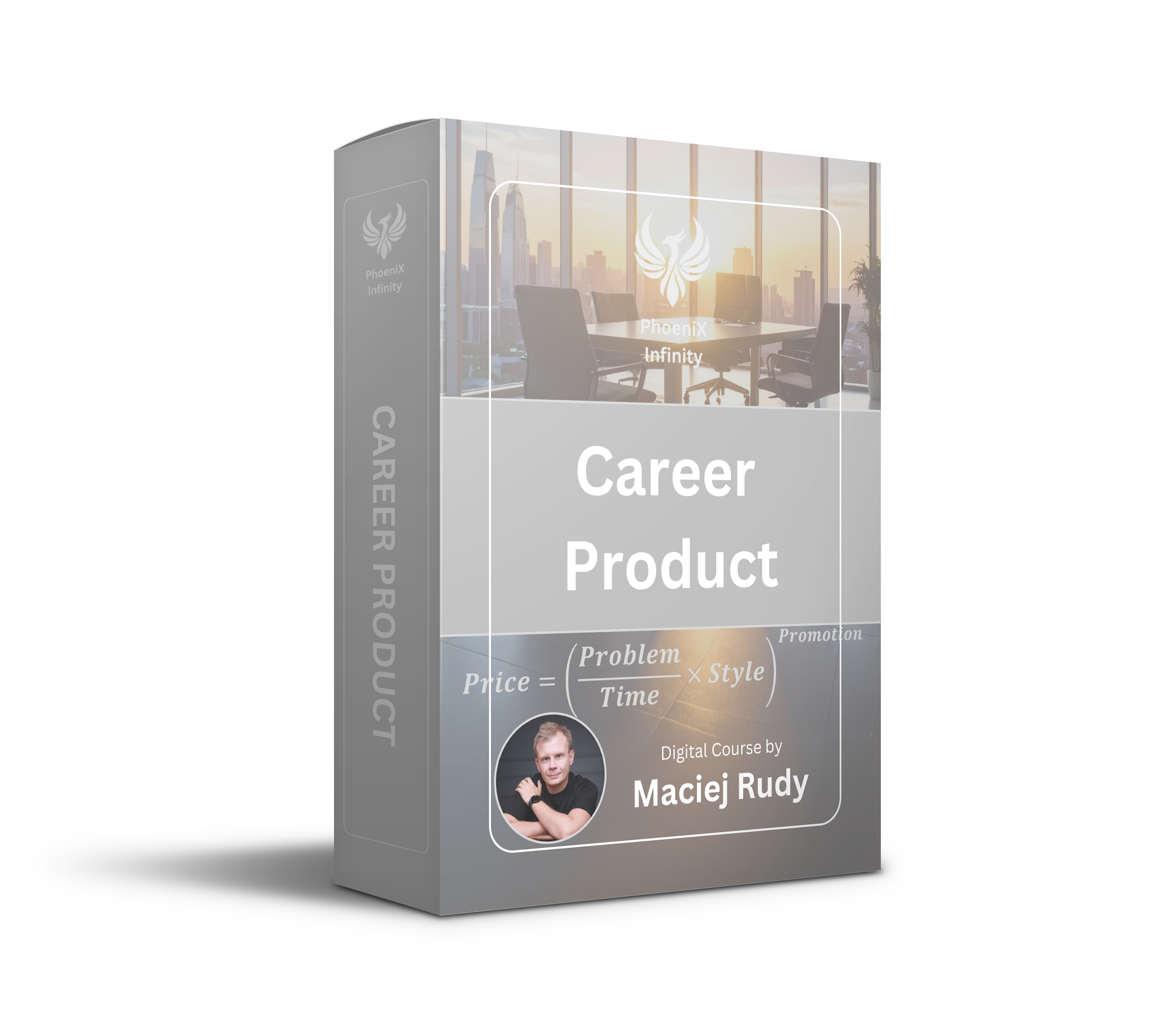
Complete blueprint to accelerate your career, salary and change forever the way you look at your career.
👉 Want to learn full framework?
Start with Career Framework. This free training and toolkit help you understand how your career really works, so you can stop guessing, start strategizing, and build a career that actually moves forward.
👉 Ready to re-design your career around your true value?
Step into Career as Product Course. If you're feeling stuck in your role, unsure how to communicate your value, or wondering why others with less experience are advancing faster, this course is for you.
No pressure. Just the tools, structure, and mindset to move forward, wherever you're starting from.




Responses