

Introduction
Welcome back to the weekly newsletter.
Many people finish work physically, but not mentally. The laptop closes, but the mind keeps going. You replay tasks, remember unfinished work, and carry stress into the evening. This week’s challenge is simple: build an Evening Shutdown Ritual. Five minutes at the end of each workday for 21 days to close the loop and protect your evening.
This ritual is not about doing more work. It is about ending work properly. You tidy the space, capture loose tasks, choose tomorrow’s first priority, and create a clear signal that the workday is finished. The goal is simple: less mental clutter at night and a cleaner start tomorrow.
Weekly highlight: Create a 5-minute end-of-day routine for 21 days.
Your brain does not like open loops.
If you leave the day messy, your mind keeps checking it later. Did I reply to that message? What was I meant to finish? What is urgent tomorrow? What did I forget?
That is why unfinished work follows you into dinner, family time, rest, and sleep.
The problem is not always workload. Sometimes it is lack of closure.
A shutdown ritual gives your brain proof that the day has been captured. You are not ignoring work. You are parking it properly.
The rule: 5 minutes only
This routine must stay short.
If you make it a 30-minute planning session, you will skip it when you are busy. Five minutes is enough to create order.
Set a timer. Same time each workday. Same sequence.
You are training your brain to recognize: work is closed for today.
Step 1: Clear the physical space
Start with your desk.
- close unused tabs
- put papers in one place
- throw away rubbish
- return your cup or plate
- place your notebook and pen neatly
- close the laptop if the day is done
This is not about having a perfect desk. It is about removing visual noise.
A messy desk often creates a messy restart. You sit down the next day and begin with friction. A clean desk gives you a clean entry point.
Step 2: Capture loose ends
Write down anything still floating in your head.
Do not organize it yet. Just capture it.
Examples:
- “reply to finance team”
- “send draft to manager”
- “review meeting notes”
- “check deadline for report”
- “follow up with supplier”
- “prepare numbers for Monday”
This step matters because your brain relaxes when it trusts that nothing is being lost.
Loose thoughts create evening stress. Captured thoughts create closure.
Step 3: Choose tomorrow’s top task
Now pick only one task that matters most tomorrow.
One.
Examples:
- “Tomorrow starts with finishing the report summary.”
- “Tomorrow starts with preparing the manager update.”
- “Tomorrow starts with reviewing the forecast assumptions.”
- “Tomorrow starts with sending the stakeholder follow-up.”
- “Tomorrow starts with the 30-minute workout.”
This is the anchor.
When tomorrow begins, you already know the first meaningful move. No debate. No scrolling. No inbox drift.
Step 4: Check tomorrow’s calendar
Spend one minute checking tomorrow.
Ask:
- What meetings need preparation?
- Is there any deadline I cannot miss?
- Where is my first focus block?
- Is my first task realistic with tomorrow’s calendar?
If tomorrow is overloaded, adjust now. Move one task. Prepare one file. Reduce one commitment if needed.
Do not wait until the morning to discover the problem.
Step 5: Say the shutdown line
End with a clear closing sentence.
Use something simple:
“That’s it. The day is closed.”
This may sound small, but it gives your mind a clean signal. You are not leaving the day open. You are closing it with intention.
Then stop.
No more “quick checks” unless something is truly urgent.
Run it for 21 days
The 21-day challenge matters because this is a habit, not a one-time tidy-up.
For the next 21 workdays, complete the same sequence:
- clear the desk
- capture loose ends
- choose tomorrow’s one task
- check tomorrow’s calendar
- say the shutdown line
Keep it boring. Boring is repeatable.
What changes
After a few days, mornings feel easier. You sit down and know where to start.
After a week, evenings feel cleaner. Your brain has less to replay.
After 21 days, you build a stronger boundary between work and personal life. You still have responsibility, but you carry less mental noise.
That is the real win.
Application
For the next 21 workdays, spend 5 minutes at the end of each day on this shutdown sequence:
- tidy your desk
- capture loose ends
- write tomorrow’s one task
- check tomorrow’s calendar
- say the shutdown line
Do it before you leave the desk. Same order every day.
Summary
A strong day does not only need a good start. It needs a clean finish. The Evening Shutdown Ritual helps you close open loops, protect your evening, and start tomorrow with less friction. Five minutes. One task for tomorrow. Twenty-one days. Simple, practical, effective.
Till Next Time,
Maciej
Build the Life You Were Meant to Live
👉 Are you ready to start?
Begin with Establish Foundations. A free training to help you reclaim your time, energy, and focus, so you can finally start making meaningful progress.
👉 Want to truly change your life and achieve any goal?
Build Life Strategy that’s flexible, achievable, and aligned with what truly matters to you. In just 30 days, you’ll start making real progress toward your goals with tools built to fit your real life.
Take Control of Your Career
Complete blueprint to accelerate your career, salary and change forever the way you look at your career.
👉 Want to learn full framework?
Start with Career Framework. This free training and toolkit help you understand how your career really works, so you can stop guessing, start strategizing, and build a career that actually moves forward.
👉 Ready to re-design your career around your true value?
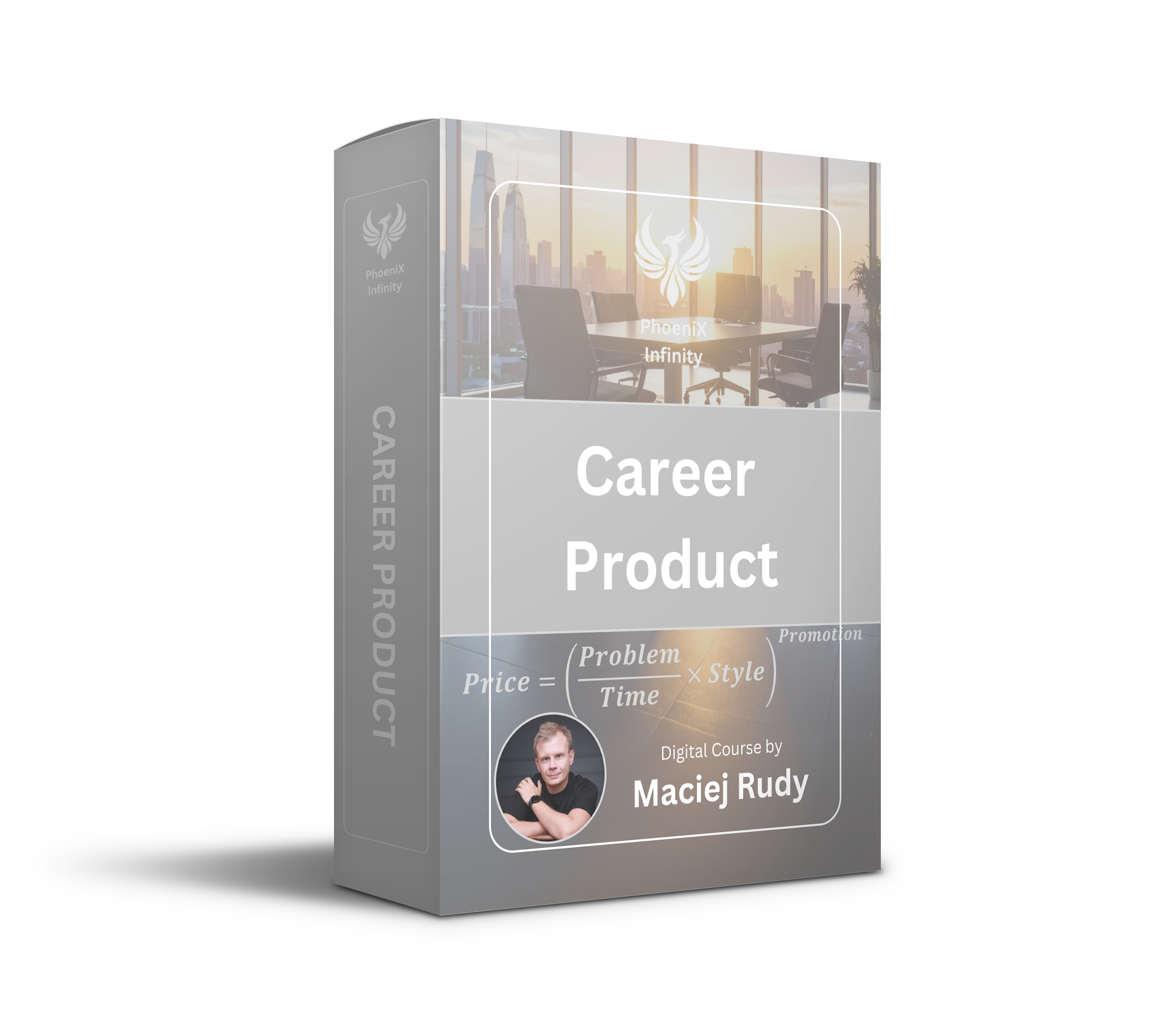
Step into Career as Product Course. If you're feeling stuck in your role, unsure how to communicate your value, or wondering why others with less experience are advancing faster, this course is for you.
No pressure. Just the tools, structure, and mindset to move forward, wherever you're starting from.





Responses