

Introduction
Welcome back to the weekly newsletter.
Meetings are not always a problem. Scattered meetings are. One 30-minute call at 9:30, another at 11:00, another at 14:00, and suddenly your whole day is broken into pieces. This week’s tool is Calendar Compression: stacking short meetings together so you protect larger blocks for real work.
Calendar Compression is a simple productivity rule: group short meetings back-to-back instead of spreading them across the day. The goal is not to make your calendar look busier. The goal is to protect attention. When meetings sit in one cluster, your deep work gets cleaner space.
Weekly highlight: Stack short meetings back-to-back to free big focus blocks.
A short meeting rarely costs only the meeting time.
A 30-minute call can take 60–90 minutes of attention once you include preparation, context switching, notes, follow-up, and the mental dead zone before and after. That is why scattered meetings are so expensive when it comes to your attention and time.
They break your day into fragments.
You may still have free time on paper, but the time is too chopped up to use well. You can answer emails, tidy small tasks, or react to messages. But it is much harder to build a model, review a complex report, solve a hard problem, or prepare for a senior meeting.
Calendar Compression fixes this by putting similar demands together.
Meetings go in meeting blocks. Focus work goes in focus blocks.
Simple, useful and it gives you full control over your calendar.
Step 1: Audit your scattered meetings
Look at last week’s calendar.
Mark every meeting under 45 minutes. Then ask:
- Was this meeting arranged randomly?
- Did it break a useful focus block?
- Could it be next to another short meeting?
- Did I lose time before or after it?
You are looking for meeting scatter.
The goal is not to remove every meeting. The goal is to stop meetings from spreading across the day like weeds.
Step 2: Create two meeting zones
Pick one or two meeting zones per day.
For example:
- 10:00–12:00
- 15:00–16:30
These windows become your preferred slots for short calls, quick check-ins, project updates, stakeholder syncs, and internal alignment meetings.
Outside these zones, protect focus time where possible. Put a block in your calendar.
This gives your day structure. Instead of switching all day, you switch in controlled blocks.
Step 3: Stack short meetings back-to-back
When a 15, 25, or 30-minute meeting appears, try to place it next to another meeting.
For example:
- 10:30–10:55 project update
- 11:00–11:25 manager check-in
- 11:30–11:55 stakeholder follow-up
This creates one meeting cluster. After that, you can move into a deeper work block without another call sitting in the middle of it.
Use short gaps only when needed. For intense meetings, keep 5-10 minutes between them to capture actions and reset.
Compression does not mean chaos. It means controlled grouping.
Step 4: Protect one large focus block
Compression only works if it creates something useful.
That useful thing is a large focus block.
Aim for one block of 90–120 minutes where possible. Use it for work that needs real thinking:
- financial analysis
- presentation writing
- business case preparation
- project problem-solving
- leadership meeting prep
- process improvement
- strategic planning
- performance review preparation
This is where productivity improves. Not because you have fewer hours of meetings, but because your best thinking is no longer trapped between them.
Step 5: Use a simple reschedule script
You do not need to make this complicated.
“Can we move this to ____? I need to work on _____ that time.”
Or:
“I can do 11:00 or 11:30.”
Many of us are simply afraid to push back on the timing of the meeting. And most people will not care. They just need options.
Step 6: Do not compress everything
Some meetings need space.
Do not compress:
- difficult people conversations
- performance reviews
- high-stakes senior meetings
- complex negotiations
- meetings where you need preparation or recovery time
- meetings where you are leading a major decision
Use judgment. Calendar Compression is for routine, short, lower-risk meetings. It is not for moments that need full presence.
Step 7: Review the impact after one week
At the end of the week, check three things:
- Did I protect at least one large focus block?
- Did I reduce meeting scatter?
- Did my important work move faster?
If yes, keep the system.
If no, adjust your meeting zones. Maybe mornings are too meeting-heavy. Maybe afternoons work better. Maybe you need one meeting-light day per week.
The goal is not a perfect calendar. The goal is a calendar that supports execution.
Application
This week, run a simple Calendar Compression test:
-
Review last week’s calendar and spot scattered short meetings.
-
Choose one or two meeting zones per day.
-
Stack short meetings together where possible.
-
Protect one 90–120-minute focus block.
-
Use a reschedule script when needed.
-
Review the impact after one week.
Summary
Scattered meetings create hidden drag. Calendar Compression stacks short meetings together so your attention has room to work. Group the small calls. Protect the big blocks. Use your calendar as a productivity tool, not just a place where other people put demands.
Till Next Time,
Maciej
Build the Life You Were Meant to Live
👉 Are you ready to start?
Begin with Establish Foundations. A free training to help you reclaim your time, energy, and focus, so you can finally start making meaningful progress.
👉 Want to truly change your life and achieve any goal?
Build Life Strategy that’s flexible, achievable, and aligned with what truly matters to you. In just 30 days, you’ll start making real progress toward your goals with tools built to fit your real life.
Take Control of Your Career
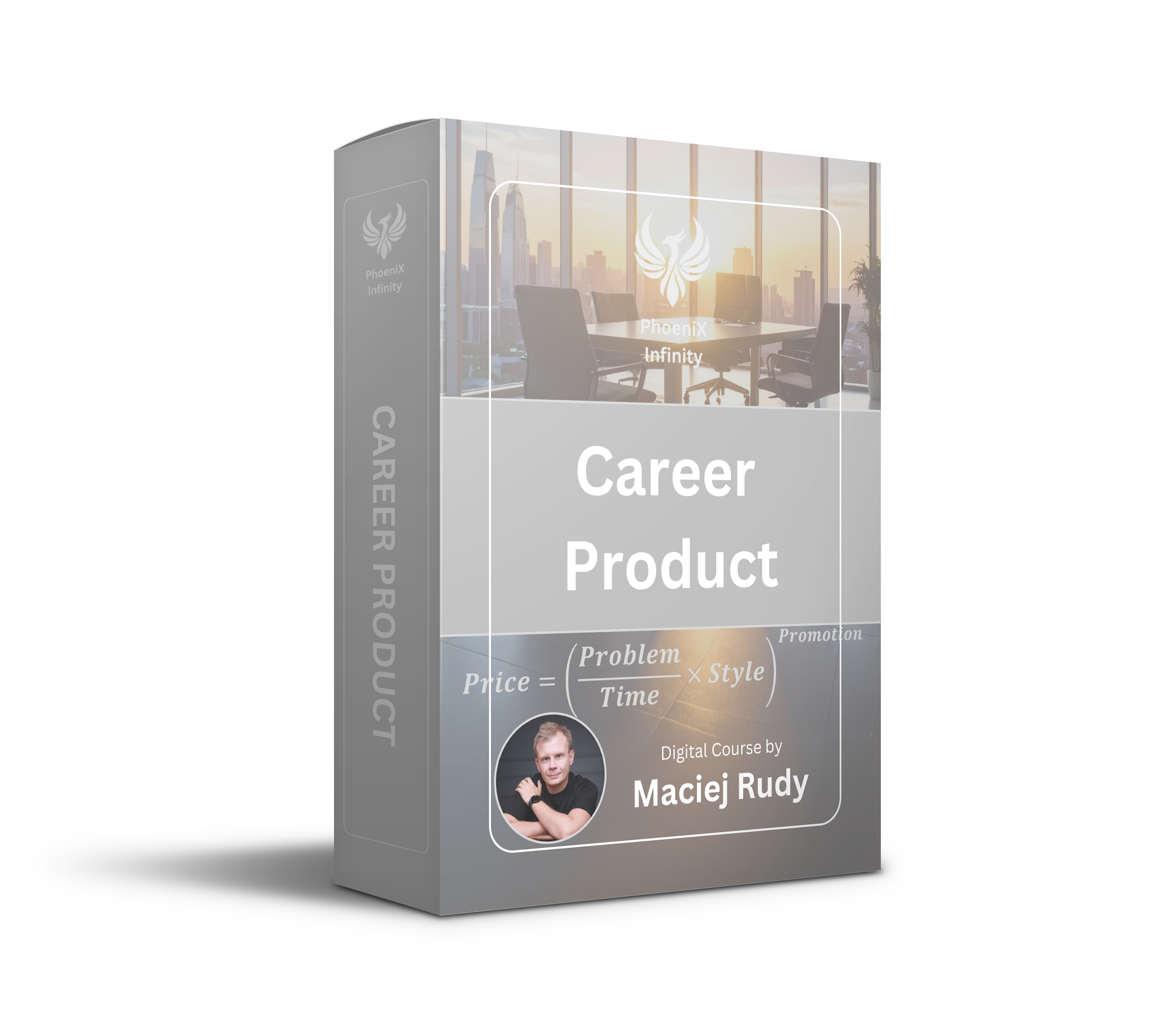
Complete blueprint to accelerate your career, salary and change forever the way you look at your career.
👉 Want to learn full framework?
Start with Career Framework. This free training and toolkit help you understand how your career really works, so you can stop guessing, start strategizing, and build a career that actually moves forward.
👉 Ready to re-design your career around your true value?
Step into Career as Product Course. If you're feeling stuck in your role, unsure how to communicate your value, or wondering why others with less experience are advancing faster, this course is for you.
No pressure. Just the tools, structure, and mindset to move forward, wherever you're starting from.





Responses