

Introduction
Welcome back to the weekly newsletter.
Hard weeks drain energy because they blur everything together. The problem, the people, the timing, the pressure, the uncertainty. When everything feels connected, it is easy to waste effort on things you cannot change. This week’s tool is Control the Controllables: a simple way to split any challenge into what you control, what you can influence, and what you must accept.
This is a mindset tool, but it is not positive thinking. It is a decision tool helping you stay calm, useful, and effective under pressure. You take one challenge and divide it into three circles: control, influence, accept. Then you move your energy to the first two and stop fighting the third.
Weekly highlight: Split a challenge into what you control, influence, and must accept so energy goes to useful action.
When pressure rises, your mind tries to solve everything at once.
That creates stress.
You worry about the economy, your manager’s mood, the company strategy, the client reaction, the project timeline, other people’s choices, and your own workload all at the same time.
Some of those things matter. But not all of them are yours to control.
If you treat everything like your responsibility, you burn out. If you treat nothing like your responsibility, you become passive. The goal is the middle: own what is yours, influence what you can, and accept what is outside your reach.
That is not weakness. It is focus.
Step 1: Name the challenge clearly
Start with one sentence.
Do not write: “Work is stressful.”
Write something specific:
- “The project deadline has moved up by two weeks.”
- “My manager keeps changing priorities.”
- “The team is waiting for data from another department.”
- “I did not get the result I expected.”
- “The company is going through restructuring.”
A clear challenge is easier to manage. A vague one becomes emotional fog.
Step 2: Write what you control
This is the smallest but most powerful circle.
You control your actions, preparation, communication, standards, attitude, and next move.
Examples:
- how clearly you explain the issue;
- what options can you prepare;
- when you escalate risk;
- how you manage your calendar;
- whether you ask for help;
- how well you prepare for a meeting;
- what work you complete today;
- how you respond under pressure.
This circle should create action. If the item does not lead to action, it probably does not belong here.
Step 3: Write what you can influence
Influence means you do not have full control, but you are not helpless.
You can influence through communication, evidence, relationships, options, and timing.
Examples:
- your manager’s decision by presenting clear trade-offs;
- stakeholder support by sharing facts early;
- team focus by clarifying priorities;
- project speed by removing blockers;
- meeting quality by sending an agenda;
- workload pressure by showing capacity limits.
Influence is not control. You can do the right things and still not get the outcome you want.
That is why this circle requires effort without attachment.
You make the best move, but you do not pretend that you own the final decision.
Step 4: Write what you must accept
This is the circle most people resist.
Acceptance does not mean approval. It means you stop wasting energy fighting reality.
Examples:
- past decisions,
- market conditions,
- another person’s final choice,
- company-wide changes,
- timing you cannot change,
- a mistake that has already happened,
- results already delivered,
- feedback you received.
If it has already happened, or it sits outside your authority, it does not deserve endless mental replays.
Accepting it frees your time for action.
Step 5: Convert the first two circles into moves
Now turn the list into action.
Pick:
- one action from the control circle,
- one action from the influence circle,
- one thing from the accept circle that you will stop replaying.
Example:
Challenge: “The deadline moved up by two weeks.”
Control:
- rebuild the plan,
- identify the critical path,
- protect focus blocks.
Influence:
- show trade-offs to the project lead,
- ask for scope reduction,
- align stakeholders on risks.
Accept:
- the deadline has changed,
- complaining will not move it back.
Next moves:
- send a revised plan today;
- propose two scope options;
- stop replaying how unfair the timeline is.
That is the shift. From frustration to traction.
Step 6: Use it before emotional decisions
This tool is most useful when you feel reactive.
Use it before:
- sending a heated message;
- quitting a project mentally;
- blaming someone;
- saying yes too fast;
- saying no too harshly;
- spiraling over a result;
- turning one setback into a story about your future.
Write the three circles first. Then decide.
You will make cleaner decisions when your energy is in the right place.
Step 7: Review the challenge after one week
At the end of the week, ask:
- Did I act on what I controlled?
- Did I influence what I could?
- Did I waste energy on what I needed to accept?
Do not use the review to punish yourself. Use it to sharpen your response.
A strong mindset is not pretending everything is fine. It is knowing where your effort works and putting it there.
Application
This week, pick one current challenge and split it into three circles:
- Control: what I can directly do
- Influence: what I can shape but not decide alone
- Accept: what I cannot change
Then choose:
- one direct action
- one influence move
- one thing to stop replaying
Use it before reacting. Especially during pressure.
Summary
Control the Controllables is not a motivational quote. It is a practical filter. Split the challenge into control, influence, and acceptance. Act where you have power. Influence where you have leverage. Release what is outside your reach. That is how you protect energy and move forward.
Till Next Time,
Maciej
Build the Life You Were Meant to Live
👉 Are you ready to start?
Begin with Establish Foundations. A free training to help you reclaim your time, energy, and focus, so you can finally start making meaningful progress.
👉 Want to truly change your life and achieve any goal?
Build Life Strategy that’s flexible, achievable, and aligned with what truly matters to you. In just 30 days, you’ll start making real progress toward your goals with tools built to fit your real life.
Take Control of Your Career
Complete blueprint to accelerate your career, salary and change forever the way you look at your career.
👉 Want to learn full framework?
Start with Career Framework. This free training and toolkit help you understand how your career really works, so you can stop guessing, start strategizing, and build a career that actually moves forward.
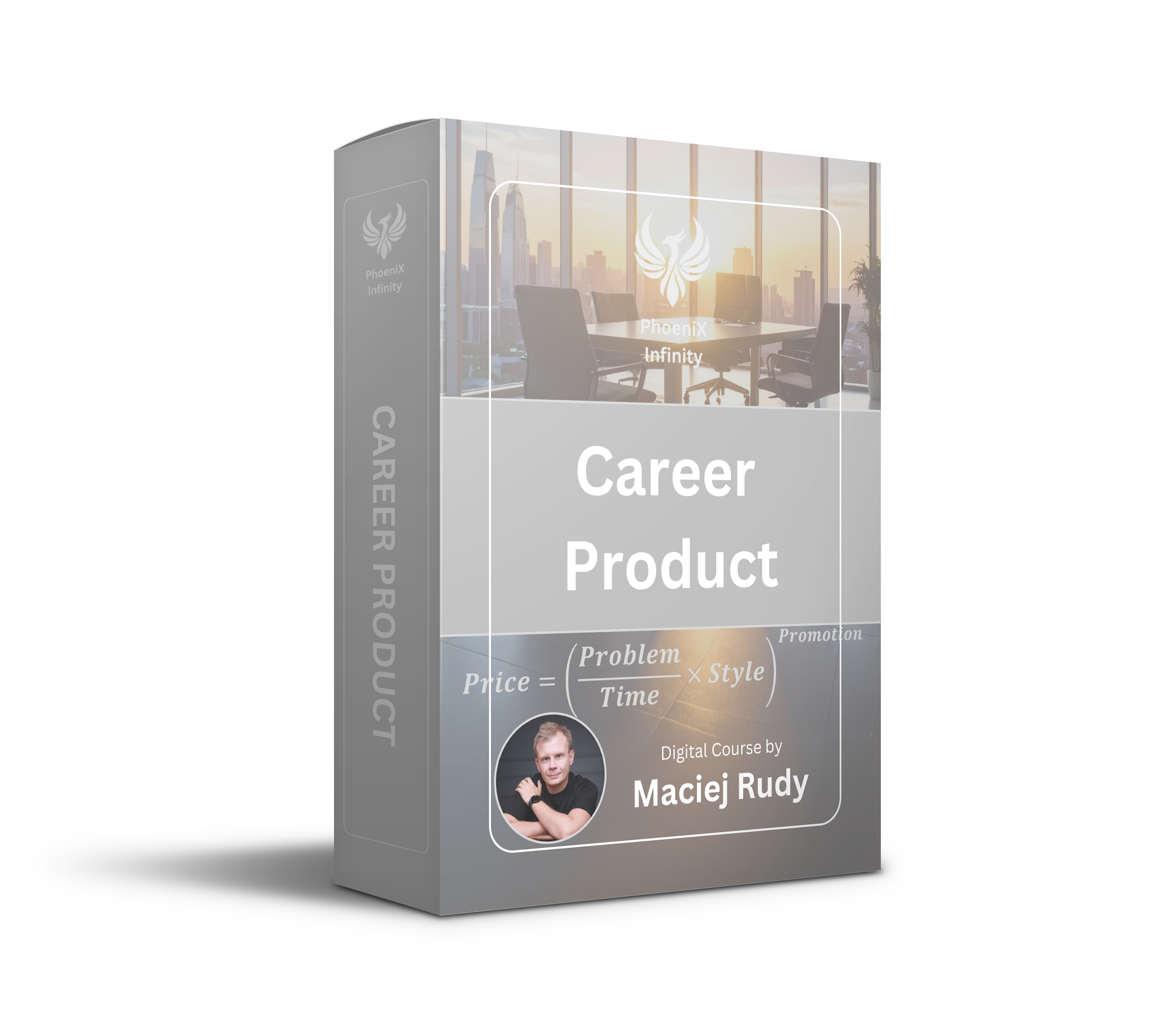
👉 Ready to re-design your career around your true value?
Step into Career as Product Course. If you're feeling stuck in your role, unsure how to communicate your value, or wondering why others with less experience are advancing faster, this course is for you.
No pressure. Just the tools, structure, and mindset to move forward, wherever you're starting from.



Responses