

Introduction
Welcome back to the weekly newsletter.
Most weeks end without much reflection. We finish the last meeting, close the laptop, deal with whatever is waiting at home, and move on.
By Monday, we are already thinking about what comes next.
The problem is that when we move too quickly from one week to another, we lose useful information. Small wins disappear. Friction gets repeated. Good habits work once and then vanish because we never stopped to understand why.
This week’s tool is the Weekly Retrospect Ritual: five simple questions to answer at the end of each week so you can spot what moved forward, what worked, what did not, and what needs to change next.
Ten focused minutes on Friday is enough.
Weekly highlight: Friday five-prompt review to spot small gains.
Continuous improvement does not require constant reinvention. Most of the time, it looks much simpler.
You act. You observe. You adjust.
Then you repeat.
The problem is that most people complete the action but skip the observation. They keep moving without extracting the lesson.
The Weekly Retrospect Ritual creates a small pause between one week and the next.
Use the same five questions every Friday.
What moved forward?
Start with progress.
Ask:
What is genuinely further ahead than it was seven days ago?
Do not only look for finished goals.
Maybe you completed an important presentation.
Maybe you clarified a difficult problem.
Maybe you finally had a conversation you had been avoiding.
Maybe you exercised three times, saved money, progressed a qualification, or spent proper time with your family.
Small movement still counts. A project moving from 40% to 55% is progress. Understanding why something is failing is also progress. The purpose is to notice where your actions are actually creating movement.
What worked?
Next, identify something worth repeating.
Ask:
What did I do this week that made execution easier or produced a better result?
Maybe you protected two uninterrupted hours before meetings started.
Maybe preparing properly before a difficult conversation made it much easier.
Maybe exercising immediately after work proved more reliable than leaving it until the evening.
Maybe sending your manager a short progress update prevented several follow-ups.
When something works, capture the cause. Do not rely on accidentally repeating it. Turn successful behavior into deliberate behavior.
What created friction?
Now look for what made progress harder than necessary.
Ask:
Where did I lose unnecessary time, energy, or momentum?
Maybe you waited three days for information you could have requested on Monday.
Maybe you accepted meetings you did not need to attend.
Maybe unclear ownership created duplicate work.
Maybe you consistently planned demanding work during the part of the day when your energy was lowest.
Keep this practical. “It was a stressful week” gives you very little to work with.
“I accepted four meetings without checking whether I needed to attend” gives you something you can change.
Focus on friction you can influence.
What did I learn?
A useful week does not always produce a visible result. Sometimes its value is new information.
Ask:
What do I understand now that I did not understand on Monday?
Maybe a project is more complicated than expected.
Maybe your manager cares more about speed than the level of detail you have been providing.
Maybe you discovered that a stakeholder needs much earlier involvement.
Or maybe you learned something about yourself: you work better in the morning, prepare better the night before, or make worse decisions when tired.
Write the lesson down while it is still fresh. If you do not capture it, there is a good chance you will have to learn it again.
What will I change next week?
This is the most important question. Reflection is useful only if it changes behavior.
Ask:
Based on this week, what is one thing I will do differently next week?
Keep it specific.
For example:
Observation: I lost my best working hours to email.
Change: I will complete my first priority before opening the inbox.
Or:
Observation: A project stalled because I requested stakeholder input too late.
Change: I will send all key requests by Monday afternoon.
Or:
Observation: Scheduling workouts in advance worked.
Change: I will book all three before the week starts.
One meaningful adjustment is enough. Small corrections compound.
Keep a running record
Do not throw away each retrospective after you complete it. Keep them together. A notebook, spreadsheet, document, or simple note is enough. After six or eight weeks, review them. You may start seeing patterns.
The same friction appears repeatedly.
Certain habits consistently produce better weeks.
One life area receives attention while another keeps getting ignored.
The same lesson appears three times because you still have not acted on it.
That is when the ritual becomes much more useful. You stop reviewing isolated weeks and start understanding how you operate.
Application
At the end of this week, take ten minutes and answer:
- What moved forward?
- What worked?
- What created friction?
- What did I learn?
- What will I change next week?
Keep each answer to one or two sentences.
Then finish with one clear commitment:
Next week, I will ________.
Do not turn the review into another large planning exercise.
The objective is simple: extract one useful lesson from the week and put it back into the next one.
Summary
The Weekly Retrospect Ritual creates a simple feedback loop between action and improvement. Five questions. Ten minutes. One adjustment.
Notice the progress. Repeat what worked. Remove friction. Capture the lesson. Change one thing.
You need each week to teach you something that makes the next one better.
Till Next Time,
Maciej
Build the Life You Were Meant to Live
👉 Are you ready to start?
Begin with Establish Foundations. A free training to help you reclaim your time, energy, and focus, so you can finally start making meaningful progress.
👉 Want to truly change your life and achieve any goal?
Build Life Strategy that’s flexible, achievable, and aligned with what truly matters to you. In just 30 days, you’ll start making real progress toward your goals with tools built to fit your real life.
Take Control of Your Career
Complete blueprint to accelerate your career, salary and change forever the way you look at your career.
👉 Want to learn full framework?
Start with Career Framework. This free training and toolkit help you understand how your career really works, so you can stop guessing, start strategizing, and build a career that actually moves forward.
👉 Ready to re-design your career around your true value?
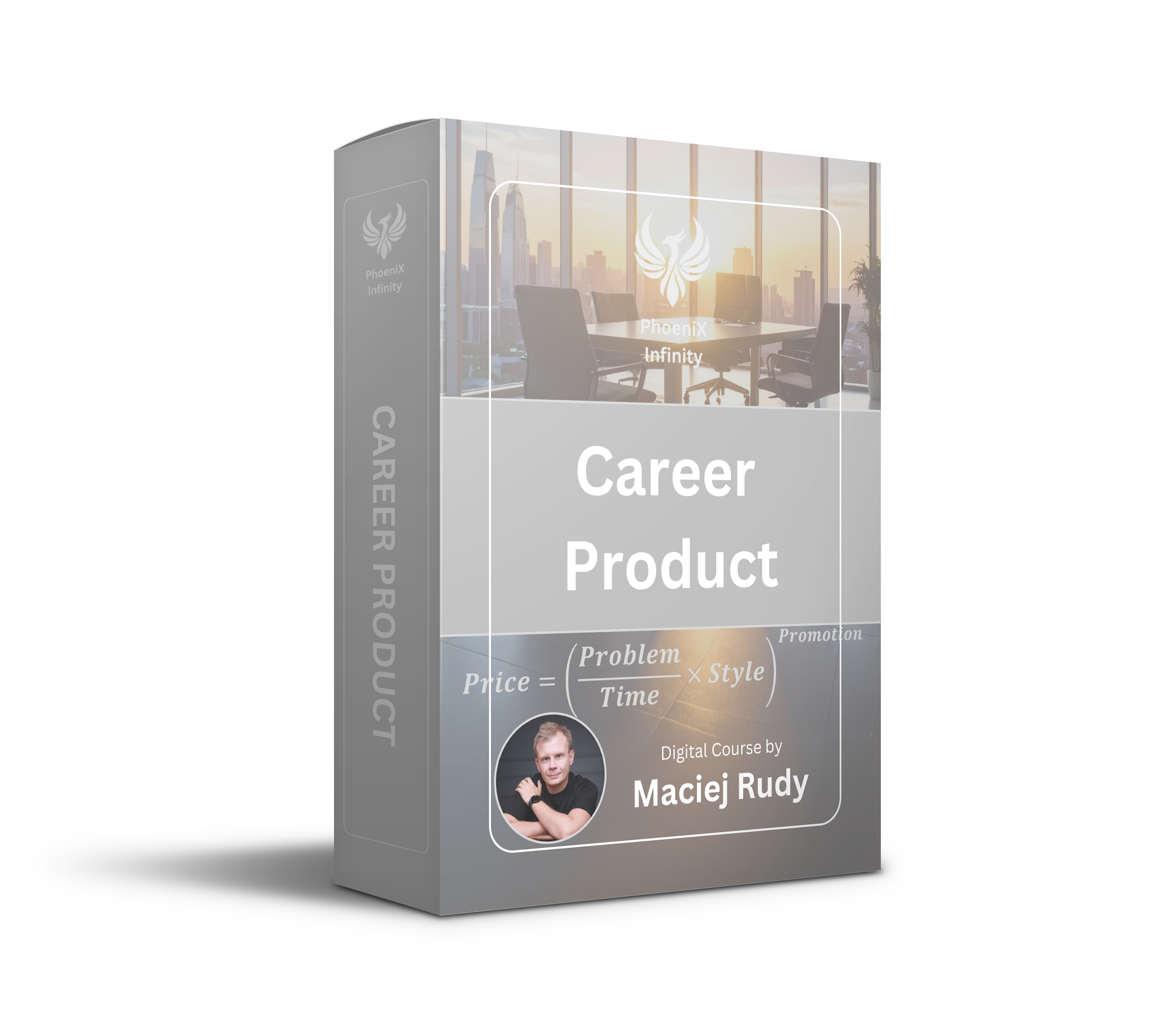
Step into Career as Product Course. If you're feeling stuck in your role, unsure how to communicate your value, or wondering why others with less experience are advancing faster, this course is for you.
No pressure. Just the tools, structure, and mindset to move forward, wherever you're starting from.





Responses