

Introduction
Welcome back to the weekly newsletter.
We often drift in our days not because we didn’t plan. We fail because our plan gets hijacked. Small requests, random meetings, “quick fixes,” and other people’s urgency. This week you’ll run a Priority Drift Check. It takes 10 minutes. It tells you if your time matched your goals and what to change next week.
Weekly highlight: Compare last week’s top 3 goals with what actually consumed time
A Priority Drift Check compares two things:
- your Top 3 goals from last week, and
- what actually consumed your time.
Then you quantify the drift as a percentage. This gives you one clear truth: did you execute your priorities or did you drift?
If you don’t measure drift, you repeat it. You end the week tired and frustrated, with no clear reason why. The drift check turns “I was busy” into data. Once you see the pattern, you can fix it with one or two rules instead of thinking of a full life overhaul.
Step 1: Write last week’s Top 3 (2 minutes)
Use what you intended, not what you now wish you intended. If you didn’t write Top 3 last week, use the three outcomes you believed mattered most on Monday morning.
Write them as outcomes, not tasks:
- “Send draft proposal to manager”
- “Finish presentation outline”
- “Close budget variance analysis”
Step 2: Identify the actual time sinks (4 minutes)
Look at your calendar first. Then scan messages and to-do items. List the 3–5 things that ate the most time. Keep it blunt:
- meetings
- urgent requests
- admin/inbox
- rework
- firefighting
- scrolling/procrastination
It’s not about judging yourself. You’re collecting evidence.
Step 3: Estimate your time split (2 minutes)
You don’t need perfect tracking. You need a rough truth. Estimate last week’s working time as 100%. Then allocate:
- % spent on Top 3 goals (combined)
- % spent on everything else
Example:
Top 3 goals: 40%
Everything else: 60%
Now you can calculate drift.
Step 4: Calculate drift (1 minute)
Drift % = 100% − % spent on Top 3
If you spent 40% on Top 3, drift is 60%.
That number tells you the truth of your week.
Step 5: Classify the drift (1 minute)
Not all drift is equal. Label it:
- Unavoidable drift: real emergencies, true deadlines, critical incidents
- Avoidable drift: meetings with no output, unclear scope, poor boundaries, rework, random requests
This matters because you only fight the avoidable part.
Step 6: Pick one correction rule for next week (the key step)
Your goal is not zero drift. Your goal is to lower drift. Choose one rule that attacks the biggest avoidable sink.
Examples of correction rules:
- Meeting rule: “No agenda = no meeting.”
- Scope rule: “New request replaces one current task or it moves to next week.”
- Inbox rule: “Email twice per day only.”
- Deep work rule: “One 90-minute block before any meetings.”
- Rework rule: “Send draft early to reduce last-minute changes.”
Choose one. If you pick five, you’ll do none.
Step 7: Pre-protect time for Top 3 (the antidote)
Next week’s Top 3 needs protected blocks on the calendar before the week begins. Put those blocks in first. When people request time, you fit them around what matters. Your calendar is your strategy.
What success looks like
If your drift was 60% last week, don’t aim for perfection. Aim for 45%. Then 35%. Drift drops when you enforce one rule and protect one block. That’s how control returns.
Application
-
Write your last week Top 3.
-
Estimate % time spent on Top 3 vs everything else.
-
Calculate drift %.
-
Label drift: unavoidable vs avoidable.
-
Set one correction rule for next week.
-
Block time for next week’s Top 3 before Monday.
Summary
A drift check gives you reality. Reality gives you control. Compare your Top 3 to your actual week, calculate drift, and fix one cause. Reduce drift week by week and your life stops feeling random.
Till Next Time,
Maciej
Build the Life You Were Meant to Live

👉 Are you ready to start?
Begin with Establish Foundations. A free training to help you reclaim your time, energy, and focus, so you can finally start making meaningful progress.
👉 Want to truly change your life and achieve any goal?
Build Life Strategy that’s flexible, achievable, and aligned with what truly matters to you. In just 30 days, you’ll start making real progress toward your goals with tools built to fit your real life.
Take Control of Your Career
Complete blueprint to accelerate your career, salary and change forever the way you look at your career.
👉 Want to learn full framework?
Start with Career Framework. This free training and toolkit help you understand how your career really works, so you can stop guessing, start strategizing, and build a career that actually moves forward.
👉 Ready to re-design your career around your true value?
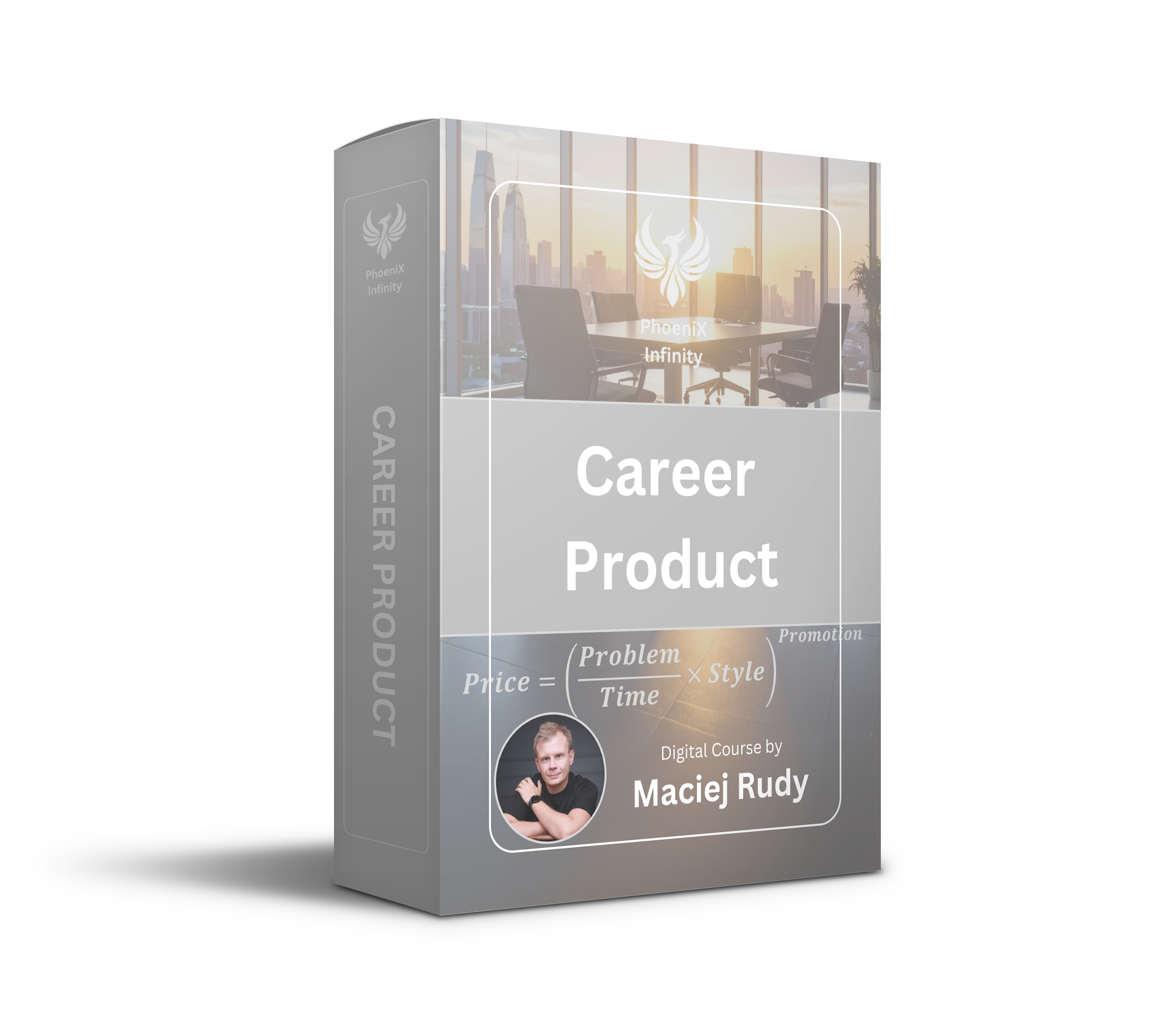
Step into Career as Product Course. If you're feeling stuck in your role, unsure how to communicate your value, or wondering why others with less experience are advancing faster, this course is for you.
No pressure. Just the tools, structure, and mindset to move forward, wherever you're starting from.





Responses