

Introduction
Welcome back to the weekly newsletter.
Most workdays do not start with the most important task. They start with email.
A quick message. A small admin task. A simple update. Something easy that creates the feeling of movement.
Then the difficult work gets pushed later.
By the time we finally reach it, energy is lower, meetings have appeared, attention is fragmented, and the task feels even heavier than it did in the morning.
This week’s tool is the Hard Start Rule: begin every focused work block with ten minutes on the toughest task. Not necessarily until it is finished. Just ten minutes.
Weekly highlight: Begin every work block with the toughest task for 10 minutes.
The Hard Start Rule is based on a simple idea:
Do not give your best starting energy to your easiest work.
The first minutes of a work block matter. Your attention is usually cleaner. You have not yet accumulated interruptions. And you have not spent an hour negotiating with yourself about what to do. That makes the beginning of the block valuable.
Instead of using it on something easy, deliberately spend it on the task with the most resistance.
Define the hard task before the block starts
Do not sit down and ask:
What should I work on?
That creates another opportunity to avoid the difficult task. Decide in advance.
The hard task is usually the thing that is:
- important but uncomfortable;
- mentally demanding;
- easy to postpone;
- carrying real consequences;
- unclear enough that you keep avoiding it.
For example:
Not: Work on presentation.
But: Build the first version of the recommendation slide.
Not: Review the financial model.
But: Investigate the three largest variances and write the first explanation.
Not: Prepare for the difficult conversation.
But: Write the three points I need to say clearly.
The harder the task, the more specific the starting point should be.
Commit to only ten minutes
This is where the rule becomes manageable.
You are not promising to finish the task. You are committing ten minutes.
For this time, do not check email, switch tabs, clean the document, reorganize your task list, or prepare to begin.
Work directly on the difficult part.
The objective is to cross the resistance barrier. Often, ten minutes is enough to make the task feel less intimidating. Once you understand the problem better, write the first paragraph, build the first calculation, or make the first decision, continuing becomes easier.
Start with the hardest part, not the easiest part of the hard task
There is a subtle trap here. You can technically work on the difficult project while still avoiding the difficult work. Imagine you need to prepare an important executive presentation.
You spend ten minutes:
- changing fonts;
- cleaning slide formatting;
- moving pages around;
- searching for an old template.
You are working on the presentation. But you are not doing the hard part.
The hard part may be: What is my recommendation?
Or:
Why did performance deteriorate?
Or:
What decision do I need leadership to make?
That is where the first ten minutes should go.
Ask:
What part of this task am I most tempted to avoid?
Start there.
Use the rule at the start of every serious work block
The Hard Start Rule is not only for mornings. Use it whenever you begin a meaningful block of focused work.
For example:
You have 60 minutes between meetings.
Spend the first 10 minutes on the toughest part of your priority project.
You have 90 minutes after lunch.
Start with the analysis you have been avoiding.
You have an evening block for personal development.
Begin with the difficult chapter, practice problem, or application exercise.
The rule is:
Hard first. Easy later.
This stops difficult work from continuously sliding to the end of the day.
Do not confuse urgency with difficulty
The hardest task is not always the loudest task. Your inbox may contain ten urgent-looking messages. That does not automatically make email the hardest or highest-value work. A difficult task often has no notification attached to it.
Strategic analysis.
Career planning.
Preparing a recommendation.
Solving a recurring business problem.
Writing something important.
Learning a difficult skill.
Having a hard conversation.
These tasks can remain quiet for weeks while easy urgent work consumes your attention. So before choosing the hard start, ask:
What important task requires the most thinking, courage, or concentration right now?
That is usually a better target.
Continue if momentum appears
When the ten minutes end, assess the situation.
If you now have momentum, continue.
If you need to stop because the block is short or another commitment begins, stop.
The ten minutes still count. The purpose of the rule is not to trick yourself into endless work. It is to make sure the difficult task receives attention before easier work takes over.
Over time, this creates a different pattern. Hard work stops being the thing you hope to get to. It becomes the thing you start with.
Application
For the next five workdays:
- Identify your hardest important task before each focused work block.
- Define the exact part you will start with.
- Set a timer for 10 minutes.
- Work only on that task.
- When the timer ends, decide whether to continue or move on.
- At the end of the week, review which tasks became easier once you started them early.
Use this format:
Hard task: ______
Hardest part: ______
First 10-minute action: ______
Work block: ______
Keep it simple.
The rule only works if you actually begin.
Summary
The Hard Start Rule protects your best attention from being consumed by easy work. Choose the difficult task before the block begins. Find the part you most want to avoid. Give it the first ten minutes. Then decide what comes next.
You do not need to finish the hardest thing first. But you should stop letting it come last.
Till Next Time,
Maciej
Build the Life You Were Meant to Live
👉 Are you ready to start?
Begin with Establish Foundations. A free training to help you reclaim your time, energy, and focus, so you can finally start making meaningful progress.
👉 Want to truly change your life and achieve any goal?
Build Life Strategy that’s flexible, achievable, and aligned with what truly matters to you. In just 30 days, you’ll start making real progress toward your goals with tools built to fit your real life.
Take Control of Your Career

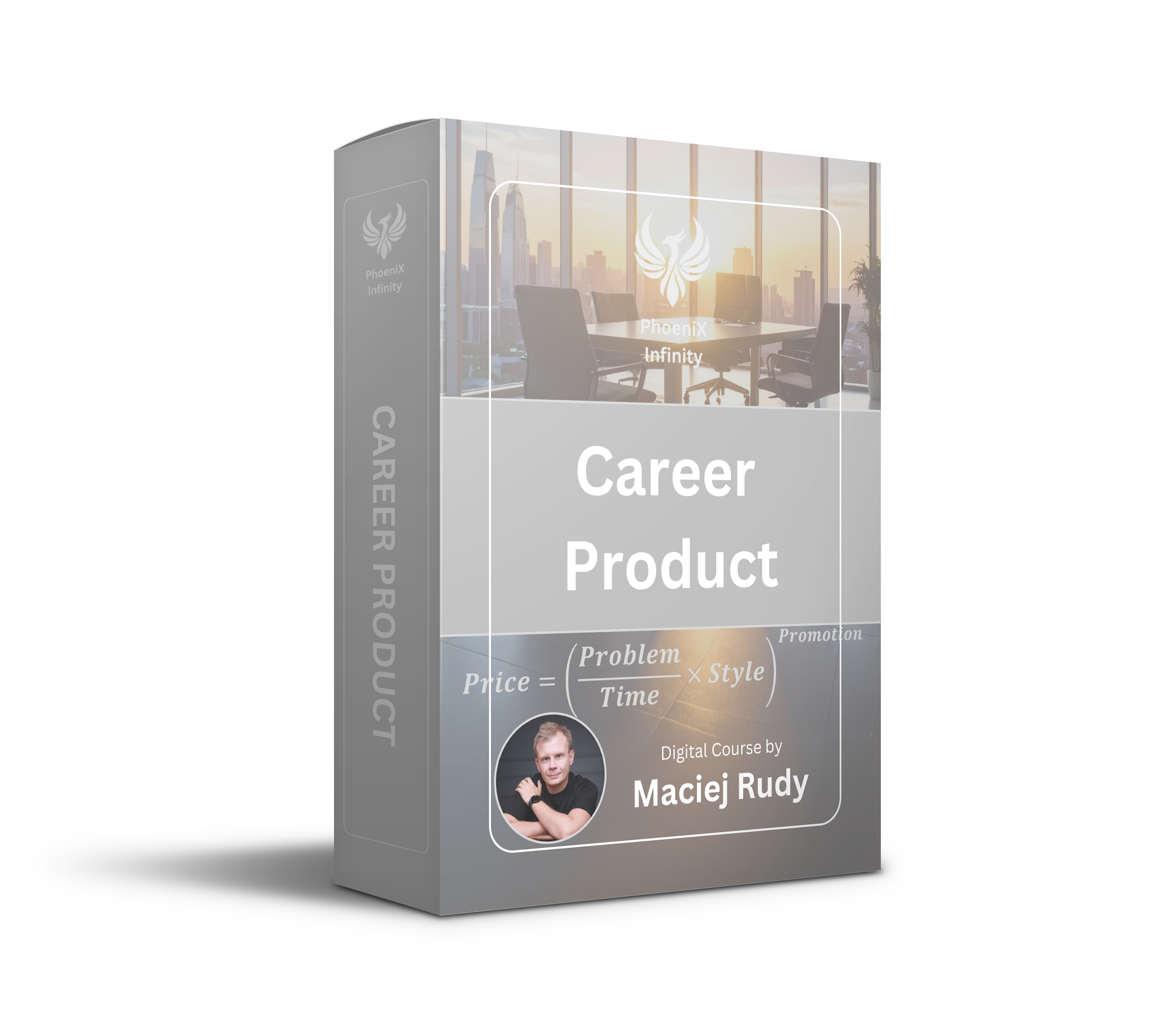
Complete blueprint to accelerate your career, salary and change forever the way you look at your career.
👉 Want to learn full framework?
Start with Career Framework. This free training and toolkit help you understand how your career really works, so you can stop guessing, start strategizing, and build a career that actually moves forward.
👉 Ready to re-design your career around your true value?
Step into Career as Product Course. If you're feeling stuck in your role, unsure how to communicate your value, or wondering why others with less experience are advancing faster, this course is for you.
No pressure. Just the tools, structure, and mindset to move forward, wherever you're starting from.





Responses