

Introduction
Welcome back to the weekly newsletter.
First of all, if you missed the announcement from this week I have just upgraded the free Establish Foundations Training. It is focused on becoming more effective in setting goals, prioritizing and executing your work. You can find a link at the end of the newsletter or check your inbox for it! It’s completely free!
Now let’s move to the core of this week and continue exploring Career Framework. This week is about learning that pays off. Not random courses. Not busywork. Not another certificate or degree. Strategic learning. The kind that upgrades your value gets you noticed. We’ll map how to choose what to learn, how to practice it, and how to turn new skill into visible impact. Simple, focused, repeatable.
Weekly highlight: Build Value Through Strategic Learning
Most people fall into the trap of believing in myths that university degree or that next certificate will make them set for life. Others learn reactively. A fire appears; they Google a trick; the fire goes out; nothing compounds. Strategic learners do the opposite. They start with the career product they’re building, then design a learning plan that upgrades that product on purpose.
Start with the Equation.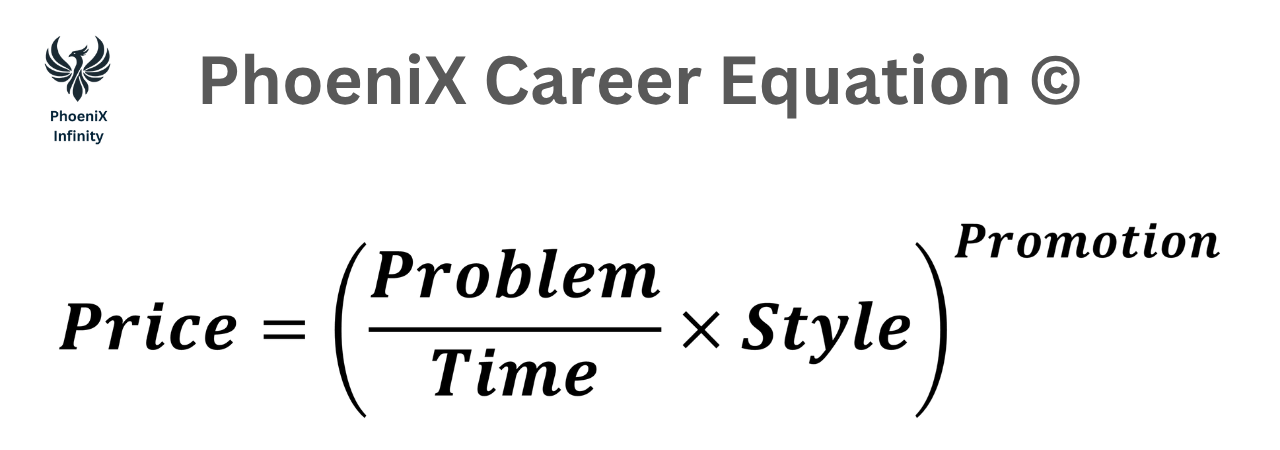
In the context of your career learning’s only goal is to drive the value of your equation up:
- The difficulty of the problems you can solve (technical knowledge)
- How fast you can solve them (execution, goal setting and prioritization)
- In what style (communication, business partnership and leadership)
- And how well you promote yourself (self-advocacy, network and personal brand we spoke about last week)
Random tutorials won’t move that needle. Focus does.
Career Stage matters.
If you work primarily alone or just starting out, your learning targets depth and delivery: core tools, analysis, crisp communication, clean execution. At manager, you add collaboration, stakeholder alignment, communication, and team leadership. At executive, you shift to narratives, direction setting, influence at scale, and brand-level thinking. Same ladder, different levels. Don’t study like an executive when you can’t solve the basic problems; don’t stay stuck in technical knowledge when you’re managing people.
Define a One-Line UVP.
But it all starts with your product.
“I’m the person who [solves X] to drive [business result Y].”
This line is your filter. If a course, book, or project doesn’t strengthen that sentence, it goes to the parking lot. If it sharpens it, it enters the plan.
Learn by doing
Zombie learning (passive consumption) will not get you anywhere. Every learning theme pairs with a live project and a visible effect: a model, a memo, a demo, or a one-pager that shows the before/after. Tangibility turns invisible progress into proof that feeds Perception on the Promotion Ladder.
Use short practice loops.
Kaizen your skill: 30–60 minutes, three times a week, on the same pattern: build, test, tighten. Swap “watch another video” for “how can I do it 1% better this time.”
The loop is: do it→ feedback → adjust → repeat.
But it always starts with tangible context.
Borrow brains.
Name one mentor and one peer reviewer per theme. Ask for specific eyes: “Is my logic tight? Is the narrative clear? What’s missing?” One sharp comment saves ten hours of wandering.
Show the learning while it’s fresh.
Fold results into your Weekly Visibility Rhythm: one crisp win, one insight, one next step. You’re not boasting; you’re closing the loop so stakeholders can use the upgrade you just created.
Advance your stage gradually.
As your depth solidifies, raise the problem level: bigger scope, more ambiguity, tighter timelines. Pair that with calmer collaboration and clearer narratives.
That’s the Product Pyramid in motion: Problem → Style → Leadership.
Let Place guide electives.
Industry, company model, culture; they shape which skills compound fastest where you are. If you’re in a product-led company, analytics storytelling might beat niche tooling. If you’re in ops, throughput and cost levers might dominate. Learn where the value pools are.
Strategic learning feels understated while you’re doing it. Then, one quarter later, your work reads cleaner, your results land faster, and people start asking for your help before projects even kick off. That’s the point: learning that upgrades your product and your pull.
Application
-
Define your product. Write your one-line UVP. Keep it visible.
-
Choose 3 themes for the next 90 days: matching your career stage and aspirations
-
Attach a real project + tangibility to each theme (model, project, slide, presentation).
-
Schedule three 45-minute practice blocks per week tied to those areas.
-
Line up one mentor and one peer per theme for targeted feedback.
-
Add a “learning win” to your weekly update so impact is seen, not guessed.
Summary
Strategic learners don’t chase content; they upgrade value on purpose. Start with the Equation and your stage. Pick three themes that sharpen your UVP. Practice in short cycles, ship artifacts, and show the impact as you go. Quiet, focused learning today becomes career pull tomorrow.
Till next time,
Maciej
Take Control of Your Career
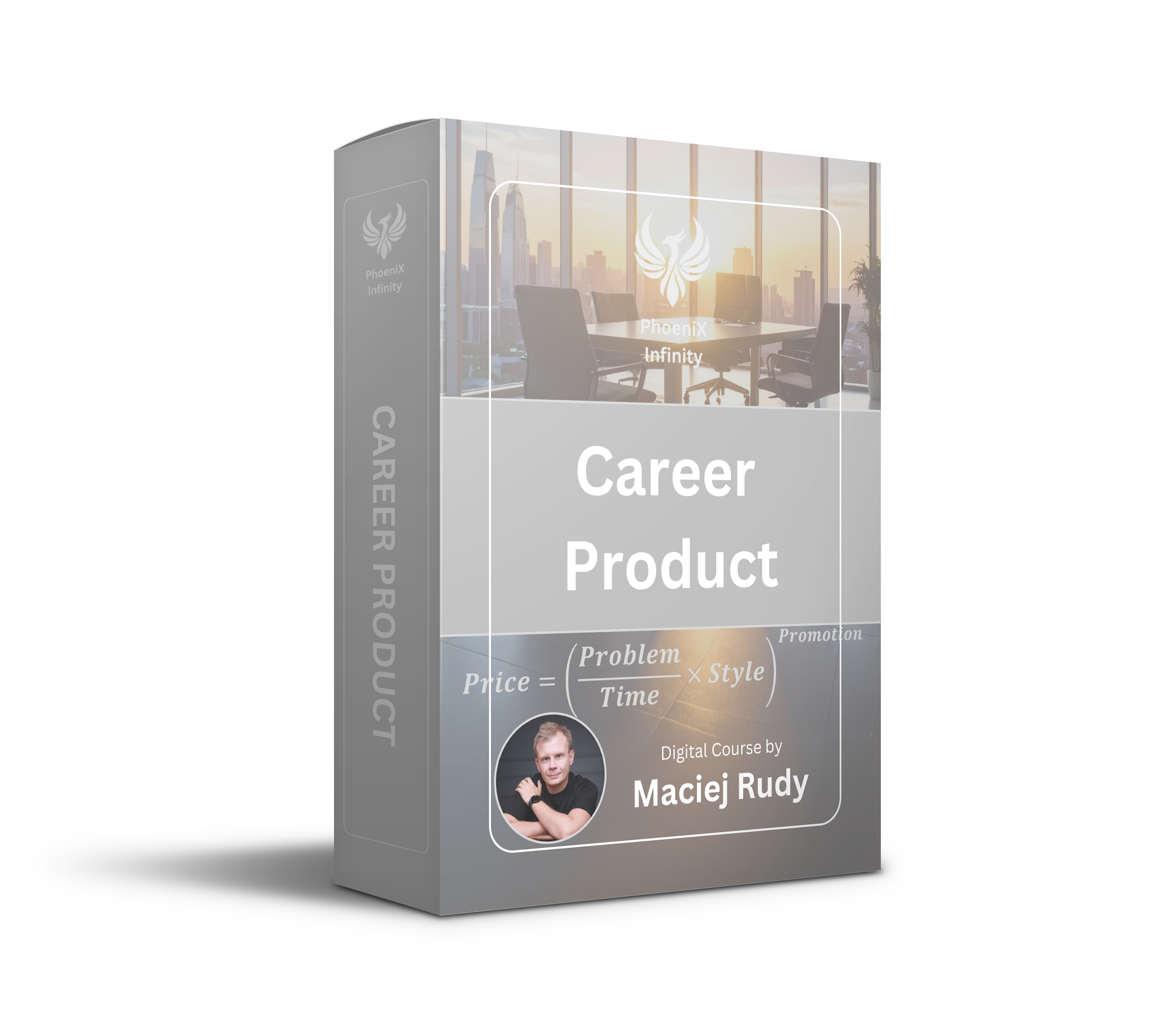
Complete blueprint to accelerate your career, salary and change forever the way you look at your career.
👉 Want to learn full framework?
Start with Career Framework. This free training and toolkit help you understand how your career really works, so you can stop guessing, start strategizing, and build a career that actually moves forward.
👉 Ready to re-design your career around your true value?
Step into Career as Product Course. If you're feeling stuck in your role, unsure how to communicate your value, or wondering why others with less experience are advancing faster, this course is for you.
No pressure. Just the tools, structure, and mindset to move forward, wherever you're starting from.
Build the Life You Were Meant to Live
👉 Are you ready to start?
Begin with Bronze: Establish Foundations. a free training to help you reclaim your time, energy, and focus, so you can finally start making meaningful progress.




Responses