
Reading time: 3 minutes
Introduction
Welcome back to the weekly newsletter.
This week we’ll go further into Career Framework. Let’s keep it blunt. Your pay doesn’t rise because you stay late. It rises because your value rises. And value doesn’t magically happens, it’s built intentionally through climbing the Product Pyramid.
Problem-Solving → Collaboration Style → Leadership
Improve these layers on purpose, and the Career Equation moves in your favor. Today I’ll show you how to use that pyramid to raise the “price” of your work, step by step, at any stage.
Weekly highlight: The Product Pyramid → More Value → More Options

Your value is driven by:
- How hard the problems you solve are,
- how fast you solve them,
- and how well you work with people.
- Then and only then you multiply it by how clearly others see the impact (promotion).
Price (compensation) reflects the first three and scales with the fourth. That’s the game.
Think like product management
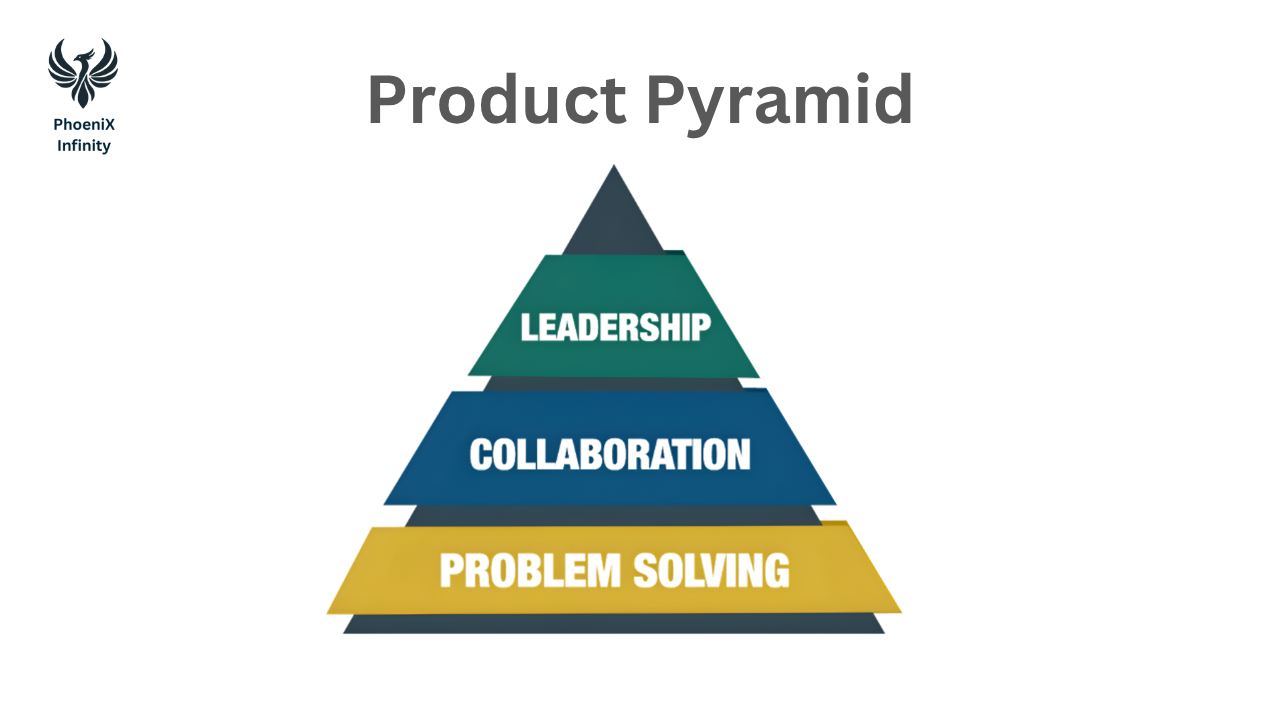
Stop treating your job as a title. Treat your career as a product. Products win when they ship better outcomes, run faster, and earn trust. Same for you. We improve that “career product” by climbing the Product Pyramid:
- Problem-Solving (foundation): technical skill, execution speed, and mental resilience.
- Collaboration Style: communication, partnership, conflict skills.
- Leadership: influence, team development, strategy.
Each layer compounds the last. Ignore any layer and you cap your value ceiling.
Problem-Solving: raise difficulty and speed
Value starts here. If your day is full of easy, repeatable tasks, you’ve essentially priced yourself like fast food: useful, replaceable and low margin. Move towards harder, ambiguous, high-stakes problems. Build hard skills, systems, and automation so you deliver faster and free capacity for bigger work. Also don’t forget about mental strength, so you can keep showing up at a high level when pressure spikes. This is the engine of your earning curve.
What great looks like: you reduce cycle times, remove bottlenecks, and take on tricky issues others avoid. Your updates sound like: “Problem → Action → Result → Business impact.” That framing helps you and your manager see rising difficulty and speed.
Collaboration Style: turn output into outcomes
Brilliant but hard-to-work-with stalls careers. Style converts smart work into shared wins. Improve communication (clarity, story with data), business partnership (co-create solutions, not hand-offs), and emotional intelligence (read the room, resolve tension). When your presence makes projects smoother and faster, leaders route bigger problems to you. That raises both difficulty and your speed; two variables that lift your price.
Leadership: multiply through others
Leadership is influence, not a title. As you guide people and systems, your impact scales past your own keyboard. Build influence (align stakeholders), team development (grow capacity around you), and strategy (choose the right problems to solve). At manager and executive levels, these skills dominate the value curve–and they still rest on the pyramid below.
Promotion multiplies the pyramid (but never replaces it)
Doing great work silently slows growth. Make impact visible (perception), invest in relationships (networking), and, when ready, shape an external personal brand. Visibility is a multiplier on real value; it is not a substitute for it. Treat it as amplification, not theater.
Spoiler: We’ll go in more details regarding promotion next week
Stage fit: evolve your focus as you rise
Early in your career? Bias toward technical depth and execution, with a small but steady dose of communication.
Growing more or becoming early manager? Push collaboration and influence.
Manager/exec? Lead people, set direction, and keep a core expertise sharp enough to stay credible. Rebalance often; stagnation is silent decay.
Bottom line: Climb the pyramid with intent. Harder problems + faster delivery + better style → more trust → bigger scope → higher price. Then communicate that impact clearly. That’s how careers compound.
Application
- Upgrade the work: Replace one simple task with a harder problem you can own end-to-end. Write the outcome you’ll deliver and how you’ll measure it.
- Speed pass: Identify one bottleneck and remove it (template, macro, SOP, or a clearer decision rule). Aim for a visible cycle-time win.
- Style rep: Pick one meeting this week to translate complexity into a clean one-pager: context, options, recommendation, impact. Share it before the call.
- Influence lane: Proactively align two stakeholders who disagree. Define the shared goal; propose a small joint test.
- Signal the impact: Send your manager a 5-line progress note using Problem → Action → Result → Impact → Next. Keep it factual. Repeat monthly.
Summary
Your career is a product. The Product Pyramid tells you exactly how to improve it: upgrade the difficulty of problems you solve, increase speed, sharpen collaboration, then scale through leadership. Make that impact visible, and the market adjusts your price. Do this consistently and your opportunities, compensation, and fulfillment rise together.
Till next time,
Maciej
Take Control of Your Career


Complete blueprint to accelerate your career, salary and change forever the way you look at your career.
👉 Want to learn full framework?
Start with Career Framework. This free training and toolkit help you understand how your career really works, so you can stop guessing, start strategizing, and build a career that actually moves forward.
👉 Ready to re-design your career around your true value?
Step into Career as Product Course. If you're feeling stuck in your role, unsure how to communicate your value, or wondering why others with less experience are advancing faster, this course is for you.
No pressure. Just the tools, structure, and mindset to move forward, wherever you're starting from.





Responses